

Artificial Intelligence (AI) is no longer confined to urban tech hubs; it’s making significant inroads into rural communities, including those in Colorado. This technological shift is bringing transformative changes to education, healthcare, and local economies.
AI Startups Making an Impact
Colorado has become a fertile ground for AI innovation, with numerous startups emerging across the state. For instance, Vantor, an AI company with a presence in Colorado Springs, is developing real-time spatial intelligence maps that can benefit various sectors, including agriculture and emergency response. Their recent Series A funding of over $25 million underscores the potential impact of their technology.
Similarly, Quantum Metric, another Colorado-based AI firm, has secured $275 million in funding, positioning itself for significant growth. Their focus on digital experience intelligence can help local businesses optimize their online presence, a crucial factor in today’s digital economy.
Enhancing Education Through AI
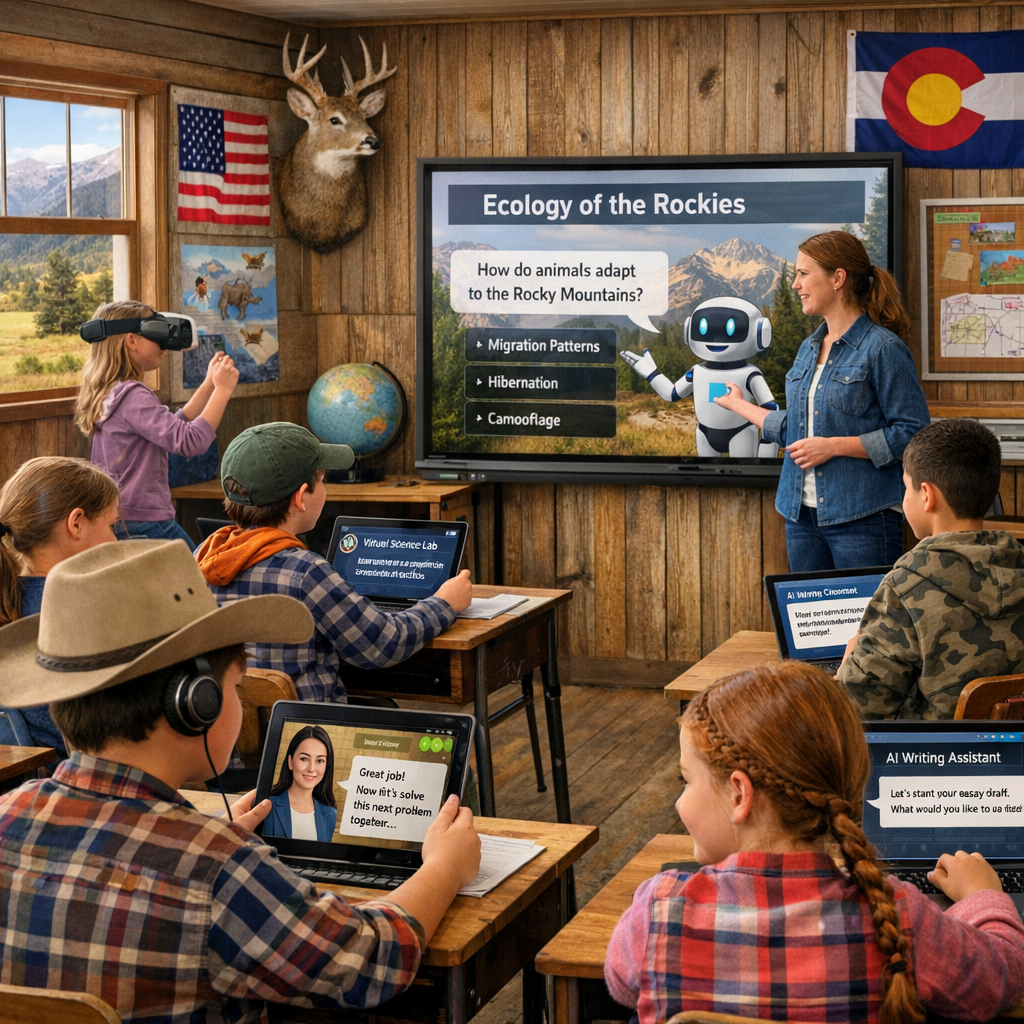
In the realm of education, AI is offering new tools to support both teachers and students. A study titled “Amplifying Rural Educators’ Perspectives: A Qualitative Study of Generative AI’s Impact in Rural U.S. High Schools” highlights how AI can streamline teaching tasks and provide personalized learning experiences. However, the study also notes challenges such as infrastructure limitations and the need for AI literacy training among educators.
Promoting Rural Entrepreneurship
AI is also playing a role in fostering rural entrepreneurship. Initiatives like the Productivity Enhancing Technology Experience Kits (PETE-Kits) have been introduced to rural high schools to expose students and teachers to smart and connected technologies. These programs aim to inspire local technology-driven entrepreneurship, addressing the unique challenges faced by rural communities.
Overcoming Challenges
Despite the promising developments, rural areas often face hurdles in adopting new technologies. Factors such as limited access to high-speed internet, lack of technical training, and financial constraints can impede progress. Addressing these issues requires a concerted effort from both public and private sectors to ensure that rural communities are not left behind in the digital age.
In conclusion, AI holds immense potential to empower rural Colorado, but realizing this potential necessitates overcoming existing barriers and fostering an environment conducive to technological adoption and innovation.